
Leather couches have earned their reputation. They hold up to kids and pets far better than most fabrics, they carry a look of sophistication that's hard to match, and while they cost more upfront, that cost tends to pay for itself over the number of years you'll actually use the piece. A well-made leather couch, properly cared for, can easily outlast two or three fabric replacements.
The problem is that "leather" gets used loosely by furniture retailers, and not every couch marketed as leather is made the way you'd expect. During tanning, a hide is split into two layers: the top grain and the bottom split. Top-grain leather — which includes full-grain, corrected, and semi-corrected leather — is the stronger, more durable option. Split leather comes from the lower layer of the hide, and while it's often finished to look similar, it's weaker and more prone to cracking or breaking down over time.
Telling the two apart isn't always obvious in a showroom, especially once a couch has been upholstered and styled. The five checks below will help you evaluate any leather couch before you commit to buying it.
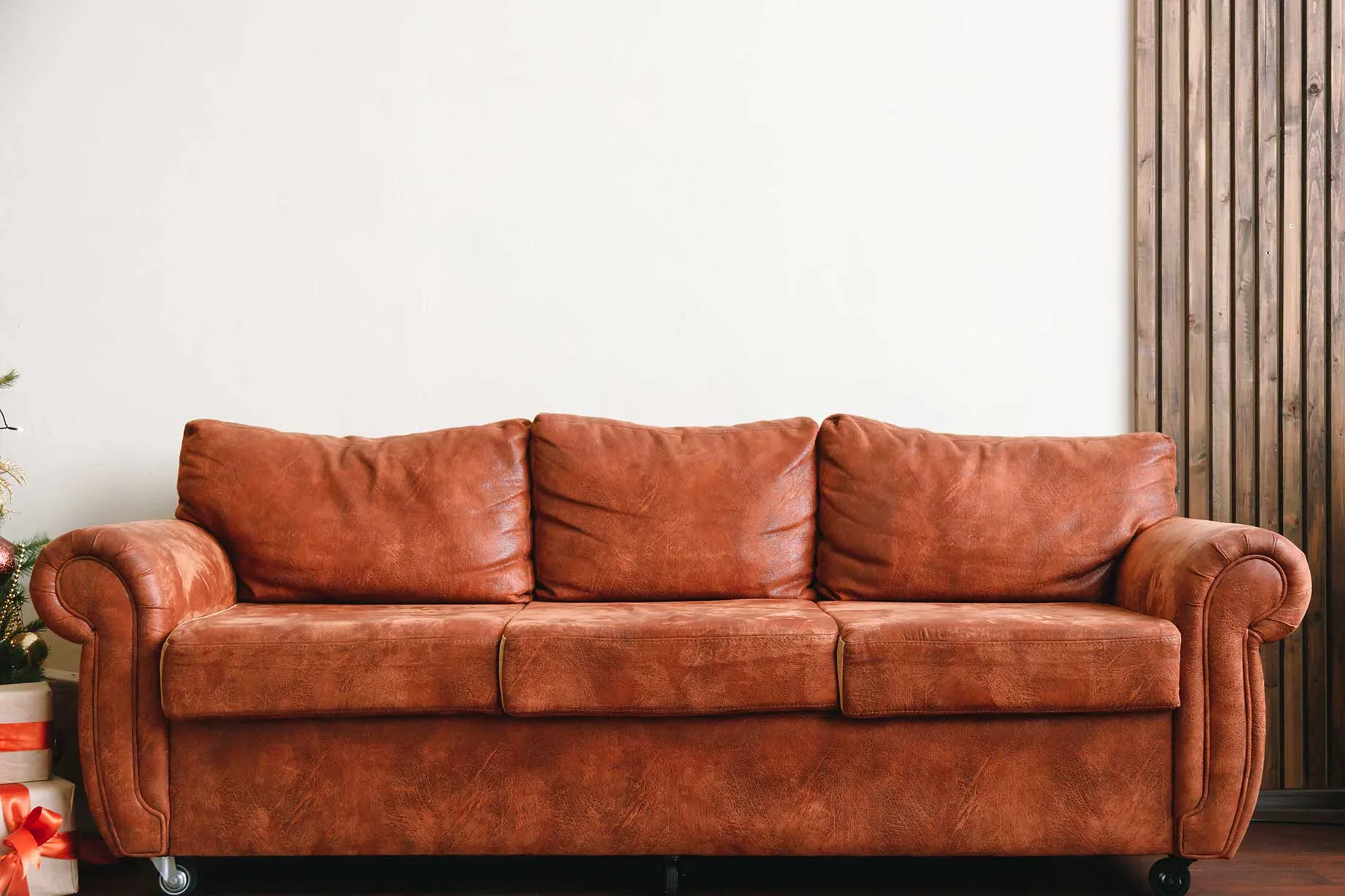
1. Watch Out for Tiny Imperfections
It sounds counterintuitive, but the first thing to look for is imperfection. Real leather is never perfectly smooth — its natural grain carries small grooves, texture variation, and minor unevenness, all of which are signs of authenticity. In almost any other buying situation, you'd steer away from imperfections. With leather, it's the opposite: a couch that looks flawlessly uniform across every panel is more likely to be a corrected or synthetic material than genuine top-grain hide.
2. Check the Back and Side Panels
Genuine leather comes from hides of a limited size, so real panels are made up of smaller patches stitched together rather than one continuous sheet. This is easiest to confirm by checking the parts of the couch that get the least attention in a showroom — the back and side panels. If those panels are unusually large or perfectly seamless, the material is likely not genuine leather, or at least not top-grain.
3. Request a Sample Swatch
Before buying, ask for a sample swatch and hold it up against every visible side of the couch. Because leather comes from natural hide, the grain pattern will vary from patch to patch — that's normal and expected. What shouldn't vary is the colour. If the swatch matches the couch's colour consistently across sides but the grain looks slightly different from panel to panel, that's a good sign you're looking at genuine leather rather than a printed or coated substitute.
4. Check for a Tightly Woven Mesh Base
It's easy to overlook the underside of the cushions, but it matters more than most buyers realize. Leather needs to breathe to hold up over time, and genuine leather couches are constructed differently from fabric couches to allow for that. Look underneath the cushions for a tightly woven mesh material — this construction supports airflow, which helps the leather maintain its quality and extends its lifespan considerably compared to a sealed or non-breathable backing.
5. Test Durability by Stretching the Sample
When you have a sample swatch in hand, don't just look at it — stretch it. Gently pulling the leather gives you a sense of how well it will age once it's upholstered onto a furniture frame and used daily for years. Leather that responds well to light stretching, without stiffness or visible strain marks, tends to hold its shape and finish much longer than leather that resists or cracks under the same test.
Already Own a Leather Couch That Needs Some Care?
Buying genuine top-grain leather is the first step — keeping it in good shape is the second. Maqsim Protection provides leather cleaning, conditioning, and repair throughout Montreal, using biodegradable, animal-safe products that are gentle on the leather and safe around kids and pets. Whether your couch needs a routine conditioning treatment or repair for cracks, scratches, or colour loss, a free estimate can tell you exactly what it needs.